Paincast
Paincast is an effort of the Pain Science Division at the Canadian Physiotherapy Association. Paincast brings together researchers, clinicians, and students to facilitate knowledge translation, discussion, and critical thinking on topics related to pain and physiotherapy. The views expressed in each episode are of individual guests, do not constitute medical advice, and do not represent the views of the Pain Science Division or the Canadian Physiotherapy Association. Follow us on Instagram @paincast.psd. While there is an effort to incorporate research evidence in the episodes, and the topic is researched by the host, we recognize there is room for improvement and there is expertise in the community. As such, we invite constructive critique and that you inform us of any inadvertent errors, so that we may correct them. You may submit feedback through this form: https://forms.gle/BQ4KymfsCuTSFGaX7. You may contact Tiffany Tiu at paincast.psd@gmail.com if you have any other inquiries.
Listen on:



Episodes

4 days ago
4 days ago
In this episode, we discussed:
The principal use of diagnostic imaging and laboratory testing: When it should be used and when it shouldn't be used
The limitations of diagnostics and ramifications of overuse on psychological, behavioural, and systemic levels
Improving providers' literacy and patient education around diagnostics
The impact of physiotherapists having the scope expansion and the current state of advocacy on this topic
Resources
The Canadian C-spine Rule
The Ottawa Ankle Rule
The Ottawa Knee Rule
Canadian Association of Radiologists Utilization Guideline
American College of Radiologist Appropriateness Criteria
Brinjikji, W., et al. (2015). MRI findings of disc degeneration are more prevalent in adults with low back pain than in asymptomatic controls: a systematic review and meta-analysis. American Journal of Neuroradiology, 36(12), 2394-2399.
Flynn, T. W., et al. (2011). Appropriate use of diagnostic imaging in low back pain: a reminder that unnecessary imaging may do as much harm as good. journal of orthopaedic & sports physical therapy, 41(11), 838-846.
Sajid, I. M., Parkunan, A., & Frost, K. (2021). Unintended consequences: quantifying the benefits, iatrogenic harms and downstream cascade costs of musculoskeletal MRI in UK primary care. BMJ open quality, 10(3).
Scott, I. A., Slavotinek, J., & Glasziou, P. P. (2024). First do no harm in responding to incidental imaging findings. Medical Journal of Australia, 220(1), 7-9.
Sharma, S., et al. (2021). “I would not go to him”: Focus groups exploring community responses to a public health campaign aimed at reducing unnecessary diagnostic imaging of low back pain. Health Expectations, 24(2), 648-658.
VOMIT (Victim Of Medical Imaging Technology) Poster: https://www.aptei.ca/product/vomit-radiology-facts-wall-poster/
Rob Werstine BA, BSc, MSc, DPT, FCAMPT, Dip Sport, MBA
Rob Werstine is a Physiotherapist who holds an Advanced Practice Provider position in the Rapid Access Clinic for Low Back Pain at LHSC in London and holds an adjunct teaching appointment in the School of Graduate Studies at Western University. Rob has spent his career opening access to health care for Canadians through the development of non-physician specialists. He helped create the first and only degree granting Clinical Master’s program for Physiotherapists in Orthopaedics at Western University in 2007 and helped create a National Clinical Specialists Program in 2012. He chaired the IFOMPT Conference in 2012 and has been an expert consultant for health care associations and regulatory bodies across North America. Rob has continued to help improve the ability of hundreds of non-physician health care professionals to take on Advanced Practice roles through the creation of Key Clinical Skills Inc., a continuing education provider for health care professionals across Canada and around the world, which has been providing education opportunities since 2016.
Dr. Jack Miller BSc(PT), Dip MT(NZ), MClSc, DPT, FCAMP
Dr. Miller completed his BSc in Physical Therapy at the University of Toronto in 1980. He then spent six years in New Zealand where he completed the New Zealand Manipulative Therapy Association’s Graduate Diploma of Manipulative Therapy in 1984. During this program he had the opportunity to be directly mentored by both Robin McKenzie and Brian Mulligan. On returning to Canada, he went on to complete a Masters of Clinical Science at Western University in London and a Post-Professional Doctor of Physical Therapy Degree from the University of St. Augustine in the USA.
Jack has been the senior editor of the Canadian Physiotherapy Association’s Orthopaedic Journal, an executive member of the Orthopaedic Division of CPA, the President of the Canadian Academy of Manipulative Physical Therapy, a member of the CPA Specialization accreditation committee, the conference chair for IFOMPT 2012, and was a founding member of the Mulligan Concept Teacher’s Association.
He has presented at conferences internationally, published research articles in peer-reviewed journals, multiple textbook chapters and taught high level, evidence-based manual therapy courses internationally since 1990. He works clinically as an advanced practice consultant triaging patients for imaging, laboratory investigations, medical interventions and surgery
www.mulligancanada.com | www.keyclinskills.ca
Paincast is dedicated to bringing together researchers, clinicians, and students to discuss topics related to pain and physiotherapy. The primary purpose is to facilitate knowledge translation and critical thinking. Some episodes posit themselves as more educational than others, and some more opinionated than others. The listener is encouraged to listen critically. While there is an effort to incorporate research evidence, and the topics are always researched by the host, we recognize there is room for improvement and there is expertise in the community. As such, we invite constructive critique and that you inform us of any inadvertent errors, so that we may correct them. You may submit your feedback through this form: https://forms.gle/UFfbUHBh8uKwSKgS8
Follow Paincast on Instagram: https://www.instagram.com/paincast.psd/

Tuesday Feb 03, 2026
Tuesday Feb 03, 2026
In this episode, we talked about:
Tess and Jane's experiences of developing pelvic pain, the progression of pain during their youth and early adulthood, and their healthcare journey
How healthcare encounters can be helpful or harmful to one's pain experience
The intricate interactions between biomechanical and psychological factors in chronic pain
The unique aspects of pelvic pain contrasted with typical musculoskeletal pain, especially in young women
A huge thank you to Tess and Jane for their generous sharing of their pain story.
Paincast is dedicated to bringing together researchers, clinicians, and students to discuss topics related to pain and physiotherapy. The primary purpose is to facilitate knowledge translation and critical thinking. Some episodes posit themselves as more educational than others, and some more opinionated than others. The listener is encouraged to listen critically. While there is an effort to incorporate research evidence, and the topics are always researched by the host, we recognize there is room for improvement and there is expertise in the community. As such, we invite constructive critique and that you inform us of any inadvertent errors, so that we may correct them. You may submit your feedback through this form: https://forms.gle/UFfbUHBh8uKwSKgS8
Follow Paincast on Instagram: https://www.instagram.com/paincast.psd/

Tuesday Dec 30, 2025
Tuesday Dec 30, 2025
In this episode, you'll hear about
Two fascinating lived experiences of pain and chronic pain management principles unpacked by a physiotherapist and 2 physiotherapy students, Jules and Georgia
How pain affected these young ladies physically, psychologically, socially, and how that impact evolved as they progressed in their journey
When "pain education" helped and when it hurt, and how they reconciled it
The journey from being controlled by pain to taking control over pain
Jules and Georgia are physiotherapy students at the University of Alberta. They are also members of this year's Canadian Physiotherapy Association Pain Science Division Student Committee. A huge thank you to their generous sharing of their pain stories. Special acknowledgement to Jeff Vela, PT who kindly spoke and shared his insights in the episode.
Paincast is dedicated to bringing together researchers, clinicians, and students to discuss topics related to pain and physiotherapy. The primary purpose is to facilitate knowledge translation and critical thinking. Some episodes posit themselves as more educational than others, and some more opinionated than others. The listener is encouraged to listen critically. While there is an effort to incorporate research evidence, and the topics are always researched by the host, we recognize there is room for improvement and there is expertise in the community. As such, we invite constructive critique and that you inform us of any inadvertent errors, so that we may correct them. You may submit your feedback through this form: https://forms.gle/UFfbUHBh8uKwSKgS8
Follow Paincast on Instagram: https://www.instagram.com/paincast.psd/

Saturday Nov 01, 2025
Saturday Nov 01, 2025
In this episode, we talked about
Current healthcare gaps in managing pain in Indigenous populations + underlying causes of disparity in pain experience
Clinical pearls for treating chronic pain in Indigenous communities
Dr. Jaris Swidrovich, BSP, PharmD, PhD, AAHIVP, RPh (he/they) is an Assistant Professor, Tenure Stream, and Indigenous Engagement Lead in the Leslie Dan Faculty of Pharmacy at the University of Toronto. He is a queer, Two Spirit, Saulteaux and Ukrainian pharmacist from Yellow Quill First Nation (Treaty 4 territory, Saskatchewan). His mother was a 60s Scoop survivor and his grandmother and great-grandmother both survived Indian Residential Schools.
He received a Bachelor of Science in Pharmacy from the University of Saskatchewan (2010), a post-baccalaureate Doctor of Pharmacy from the University of Toronto (2013), and a PhD in education from the University of Saskatchewan (2024), which earned him the Governor General’s Gold Medal.
His primary areas of research and practice include Indigenous health, pain, HIV/AIDS, substance use disorders, and 2SLGBTQ+ health. As a Two Spirit, First Nations, and disabled person himself, Dr. Swidrovich brings a strong lens of equity, diversity, inclusion, intersectionality, and social justice to his research program.
Dr. Swidrovich is the Co-Scientific Director of the CIHR-funded Saskatchewan Network Environment for Indigenous Health Research (SK-NEIHR) called nātawihowin (“art of self-healing” in Cree), which is a First Nations Research Network that supports researchers, students, and First Nations health leaders and communities in Saskatchewan and beyond.
Dr. Swidrovich is the founder and chair of the Indigenous Pharmacy Professionals of Canada, and also sits on several other local, provincial, and national boards, including The 519, Pain Ontario, Pain Canada, the National Collaborating Centre for Indigenous Health, and the Institute Advisory Board for the Canadian Institutes of Health Research (CIHR) Institute of Indigenous Peoples’ Health.
Dr. Swidrovich is an active and engaged citizen of the several communities he belongs to and has been recognized with several awards and honours, including the Queen Elizabeth II Platinum Jubilee Medal for service to the community and the National Patient Care Achievement Award from the Canadian Pharmacists Association.
Resources: https://linktr.ee/jaris.s
Social media
Instagram: @jarisoftheprairies and @prisscryption
X: @jarisswidrovich
Paincast is dedicated to bringing together researchers, clinicians, and students to discuss topics related to pain and physiotherapy. The primary purpose is to facilitate knowledge translation and critical thinking. Some episodes posit themselves as more educational than others, and some more opinionated than others. The listener is encouraged to listen critically. While there is an effort to incorporate research evidence, and the topics are always researched by the host, we recognize there is room for improvement and there is expertise in the community. As such, we invite constructive critique and that you inform us of any inadvertent errors, so that we may correct them. You may submit your feedback through this form: https://forms.gle/UFfbUHBh8uKwSKgS8
Follow Paincast on Instagram: https://www.instagram.com/paincast.psd/

Saturday Aug 30, 2025
Saturday Aug 30, 2025
In this episode, we talked about
The relationship between knee osteoarthritis (OA) pain and the stages of knee OA
The different experiences of knee OA pain
Pain phenotyping using Quantitative Sensory Testing and self-reported measures
Dr. Lisa Carlesso is a an associate professor in the School of Rehabilitation Science at McMaster University in Canada with training as a clinical epidemiologist and a physical therapist. Her research program is broadly focussed on understanding the mechanisms and consequences of musculoskeletal pain with a particular focus on OA joint pain. Her research strives to optimize outcomes for people with chronic musculoskeletal disorders by 1. Understanding the complex mechanisms of acute and persistent pain through pain phenotyping to improve prognosis and treatment, 2. Using the understanding of endogenous modulation of pain to enhance conservative treatment options and 3. Improving the clinical measurement of pain.
Resources
Aoyagi, K., et al. (2022). Does weight-bearing versus non-weight-bearing pain reflect different pain mechanisms in knee osteoarthritis?: the Multicenter Osteoarthritis Study (MOST). Osteoarthritis and cartilage, 30(4), 545-550.
Rankin, J., et al. (2022). Quantitative sensory testing protocols to evaluate central and peripheral sensitization in knee OA: a scoping review. Pain Medicine, 23(3), 526-557.
Carlesso, L. C., et al. (2022). Association of pain sensitization and conditioned pain modulation to pain patterns in knee osteoarthritis. Arthritis care & research, 74(1), 107-112.
Carlesso, L. C. (2023). The impact of altered neural processing of nociceptive signals on physical function in people with knee OA—we know little and have much to learn. Osteoarthritis and Cartilage, 31(7), 844-846.
Neelapala, Y. R., et al. (2024). Exploring different models of pain phenotypes and their association with pain worsening in people with early knee osteoarthritis: the MOST cohort study. Osteoarthritis and cartilage, 32(2), 210-219.
Neelapala, Y. R., et al. (2025). Latent transition analysis of pain phenotypes in people at risk of knee osteoarthritis: The MOST cohort study. Osteoarthritis and cartilage.
Carlesso, L. C., et al. (2022). Use of IMMPACT recommendations to explore pain phenotypes in people with knee osteoarthritis. Pain Medicine, 23(10), 1708-1716.
Carlesso, L. C., et al. (2021). Association of intermittent and constant knee pain patterns with knee pain severity and with radiographic knee osteoarthritis duration and severity. Arthritis care & research, 73(6), 788-793.
Social media:
Bluesky profile @lisacarlesso.bsky.social
Dr. Carlesso's lab's website: https://painmovementresearch.healthsci.mcmaster.ca/
Paincast is dedicated to bringing together researchers, clinicians, and students to discuss topics related to pain and physiotherapy. The primary purpose is to facilitate knowledge translation and critical thinking. Some episodes posit themselves as more educational than others, and some more opinionated than others. The listener is encouraged to listen critically. While there is an effort to incorporate research evidence, and the topics are always researched by the host, we recognize there is room for improvement and there is expertise in the community. As such, we invite constructive critique and that you inform us of any inadvertent errors, so that we may correct them. You may submit your feedback through this form: https://forms.gle/UFfbUHBh8uKwSKgS8
Follow Paincast on Instagram: https://www.instagram.com/paincast.psd/

Monday Jul 28, 2025
Monday Jul 28, 2025
In this episode, we talked about:
Do we really understand what desensitization is? Clarifying concepts, including desensitization, hypersensitivity, sensory re-education, graded exposure, and counterstimulation
Important practical considerations for using “desensitization” with patients
Incorporating contextual effects of treatment and orienting patients to positive recovery expectations
Dr. Tara Packham is an occupational therapist with over 25 years of clinical experience in hand and upper limb rehabilitation, and an assistant professor in the School of Rehabilitation Sciences (SRS) at McMaster University. Tara’s program of research focuses on assessing and addressing persistent pain, and continuing to advance the field of hand rehabilitation. Tara has published and presented extensively for both hand rehabilitation and pain management audiences on persistent pain conditions impacting the upper extremity. Her research spans development and evaluation of outcome measures, refining and testing interventions, and exploring the experiences of persons with health challenges accessing rehabilitation. She is the Editor in Chief at Hand Therapy and currently serves on the editorial boards of the Journal of Hand Therapy and Pain Medicine, and on the executive of the Complex Regional Pain Syndrome Special Interest Group at the International Association for the Study of Pain.
Social Media
X: @TaraLPackham
LinkedIn: https://www.linkedin.com/in/tara-packham-21918924/
IMPRinT lab: https://painmovementresearch.healthsci.mcmaster.ca/
Paincast is dedicated to bringing together researchers, clinicians, and students to discuss topics related to pain and physiotherapy. The primary purpose is to facilitate knowledge translation and critical thinking. Some episodes posit themselves as more educational than others, and some more opinionated than others. The listener is encouraged to listen critically. While there is an effort to incorporate research evidence, and the topics are always researched by the host, we recognize there is room for improvement and there is expertise in the community. As such, we invite constructive critique and that you inform us of any inadvertent errors, so that we may correct them. You may submit your feedback through this form: https://forms.gle/UFfbUHBh8uKwSKgS8
Follow Paincast on Instagram: https://www.instagram.com/paincast.psd/

Tuesday Jul 01, 2025
Tuesday Jul 01, 2025
This episode is produced during the 2025 World Physiotherapy Congress in Tokyo, Japan. I interviewed physiotherapists around the world about pain.
Content:
(00:01:59) Nicola - United Kingdom(00:11:54) Helen - Switzerland(00:18:52) Mio - Japan(00:20:23) Edgar - Columbia(00:30:28) Marcia - Canada(00:43:31) Rosi & Leila - Indonesia(00:45:07) Nirit - Israel(00:52:56) Mike Landry - World Physiotherapy President
Episodes 8 and Episode 25 are also interviews with clinicians about pain. They are recorded during the Canadian Physiotherapy Association Congresses in 2023 and 2024.
Mike Landry also spoke about World Physiotherapy in Episode 28.
Paincast is dedicated to bringing together researchers, clinicians, and students to discuss topics related to pain and physiotherapy. The primary purpose is to facilitate knowledge translation and critical thinking. Some episodes posit themselves as more educational than others, and some more opinionated than others. The listener is encouraged to listen critically. While there is an effort to incorporate research evidence, and the topics are always researched by the host, we recognize there is room for improvement and there is expertise in the community. As such, we invite constructive critique and that you inform us of any inadvertent errors, so that we may correct them. You may submit your feedback through this form: https://forms.gle/UFfbUHBh8uKwSKgS8
Follow Paincast on Instagram: https://www.instagram.com/paincast.psd/
Tuesday May 27, 2025
Tuesday May 27, 2025
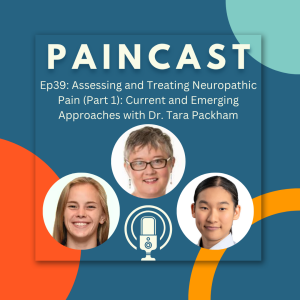
In this episode, we talked about:
Non-pharmacological management options for neuropathic pain
All about the Somatosensory Pain Rehab method
The current research on Somatosensory Pain Rehab
Dr. Tara Packham is an occupational therapist with over 25 years of clinical experience in hand and upper limb rehabilitation, and an assistant professor in the School of Rehabilitation Sciences (SRS) at McMaster University. Tara’s program of research focuses on assessing and addressing persistent pain, and continuing to advance the field of hand rehabilitation. Tara has published and presented extensively for both hand rehabilitation and pain management audiences on persistent pain conditions impacting the upper extremity. Her research spans development and evaluation of outcome measures, refining and testing interventions, and exploring the experiences of persons with health challenges accessing rehabilitation. She is the Editor in Chief at Hand Therapy and currently serves on the editorial boards of the Journal of Hand Therapy and Pain Medicine, and on the executive of the Complex Regional Pain Syndrome Special Interest Group at the International Association for the Study of Pain.
Resources
Patient support groups for CRPS: Canada - PARC: Promoting Awareness of RSD and CRPS in Canada https://www.rsdcanada.org/parc/english/index.html / USA - RSDSA https://rsds.org/
Packham, T. L., Spicher, C. J., MacDermid, J. C., Michlovitz, S., & Buckley, D. N. (2018). Somatosensory rehabilitation for allodynia in complex regional pain syndrome of the upper limb: A retrospective cohort study. Journal of Hand Therapy, 31(1), 10-19.
Somatosensory Pain Rehabilitation Network: https://www.neuropain.ch/en/home
Hebert, A., MacDermid, J., Harris, J., & Packham, T. (2024). How should we treat painful sensitivity in the hand? An international e-Delphi study. Journal of Hand Therapy, 37(1), 12-21.
Shafiee, E., MacDermid, J., Packham, T., Grewal, R., Farzad, M., Bobos, P., & Walton, D. (2023). Rehabilitation interventions for complex regional pain syndrome: an overview of systematic reviews. The Clinical Journal of Pain, 39(9), 473-483.
Social Media
X: @TaraLPackham
LinkedIn: https://www.linkedin.com/in/tara-packham-21918924/
IMPRinT lab: https://painmovementresearch.healthsci.mcmaster.ca/
Paincast is dedicated to bringing together researchers, clinicians, and students to discuss topics related to pain and physiotherapy. The primary purpose is to facilitate knowledge translation and critical thinking. Some episodes posit themselves as more educational than others, and some more opinionated than others. The listener is encouraged to listen critically. While there is an effort to incorporate research evidence, and the topics are always researched by the host, we recognize there is room for improvement and there is expertise in the community. As such, we invite constructive critique and that you inform us of any inadvertent errors, so that we may correct them. You may submit your feedback through this form: https://forms.gle/UFfbUHBh8uKwSKgS8
Follow Paincast on Instagram: https://www.instagram.com/paincast.psd/
Saturday May 10, 2025
Saturday May 10, 2025
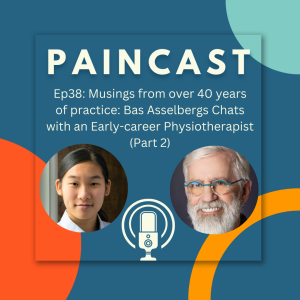
In this episode, we talked about:
A shift in how we think about the role of our hands as our understanding of pain science and patient science evolve
Discussing and addressing patient expectations for physiotherapy
Advice for physiotherapists, new and experienced
Graduated in 1983, Bas has extensive post-graduate experience in manual, exercise and movement focused therapies, sports physiotherapy and pain related education. He was a Mentor for post-graduate physiotherapists for the Pain Sciences Division of the Canadian Physiotherapy Association, and has been Team Therapist for the Junior National Figure Skating Team and the National Cross-Country Ski Team, and attended many National, World and Olympic competitions of a wide variety of sports. He has taught workshops in North America to Osteopaths, Medical Doctors and Physiotherapists since 1992. Sebastian will never stop learning. He enjoys his attempts at golf, loves travelling and being with friends and family.
Exploring Pain: Research and Meaning Facebook Group: https://www.facebook.com/groups/ExplainingPainScience
Paincast is dedicated to bringing together researchers, clinicians, and students to discuss topics related to pain and physiotherapy. The primary purpose is to facilitate knowledge translation and critical thinking. Some episodes posit themselves as more educational than others, and some more opinionated than others. The listener is encouraged to listen critically. While there is an effort to incorporate research evidence, and the topics are always researched by the host, we recognize there is room for improvement and there is expertise in the community. As such, we invite constructive critique and that you inform us of any inadvertent errors, so that we may correct them. You may submit your feedback through this form: https://forms.gle/UFfbUHBh8uKwSKgS8
Tuesday Apr 29, 2025
Tuesday Apr 29, 2025
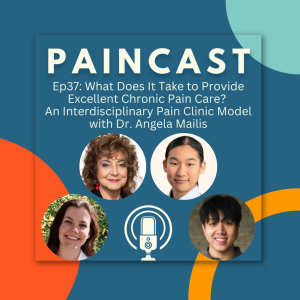
In this episode, we talked about
The systemic challenges in Ontario’s healthcare system and pain management
The importance of a quality interdisciplinary team for the benefit of the patient
What it takes to create a successful high-quality patient-centred interdisciplinary team
Dr. Angela Mailis obtained her medical degree from the Medical School of Kapodistriakon University of Athens Greece Summa Cum Laude; became a Fellow of the Royal College of Physicians of Canada with specialization in Physical Medicine (1982); and holds a Master’s degree from the Institute of Medical Science, University of Toronto (1988). She rose to the rank of Full Professor at the Faculty of Medicine, University of Toronto (2005) and has practiced exclusively in the area of Chronic Pain for the past 43 years. She founded and directed the Comprehensive Pain Program of the Toronto Western Hospital/University Health Network for 33 years (1982-2015). Subsequently she became the founder and director of the Pain and Wellness Centre in Vaughan, Ontario (2014-present), the only academic community-based pain clinic, funded by the Ontario Ministry of Health.
Resources
The Pain & Wellness Centre website: https://thepwc.ca/
Dr. Angela Mailis’s website: https://drangelamailis.com/
Pain & Wellness YouTube Channel: https://www.youtube.com/@PainAndWellnessCentre
Power Over Pain: https://poweroverpain.ca/
Mailis, A., & Lakha, S. F. (2019). From (Ontario Ministry of Health and Long-Term Care) policy to implementation: a retrospective look at a community-based patient-centered model of care for chronic pain. Canadian Journal of Pain, 3(1), 114-125.
Mailis, A., Deshpande, A., & Lakha, S. F. (2022). Long term outcomes of chronic pain patients attending a publicly funded community-based interdisciplinary pain program in the Greater Toronto area: results of a practice-based audit. Journal of Patient-Reported Outcomes, 6(1), 44.
Lakha, S. F., Hapidou, E. G., Robinson, J., & Mailis, A. (2022). Comparison of motor vehicle accident (MVA) survivors and non-MVA pain patients attending an interdisciplinary pain management program. Psychological Injury and Law, 15(4), 385-394.
Social media
Facebook: https://www.facebook.com/painandwellnesscentre/
Instagram: https://www.instagram.com/painandwellnesscentre/
LinkedIn: https://www.linkedin.com/company/thepwc/?viewAsMember=true
Paincast is dedicated to bringing together researchers, clinicians, and students to discuss topics related to pain and physiotherapy. The primary purpose is to facilitate knowledge translation and critical thinking. Some episodes posit themselves as more educational than others, and some more opinionated than others. The listener is encouraged to listen critically. While there is an effort to incorporate research evidence, and the topics are always researched by the host, we recognize there is room for improvement and there is expertise in the community. As such, we invite constructive critique and that you inform us of any inadvertent errors, so that we may correct them. You may submit your feedback through this form: https://forms.gle/UFfbUHBh8uKwSKgS8
Follow us on Instagram: https://www.instagram.com/paincast.psd/